
Gun up Weapon Ball Shooter
Fun Games TeknolojiRole Playing
4.2580.00 Reviews
- Version
- 5.1
- Installs
- 5.00M
- Age Rating
- Everyone
Screenshots
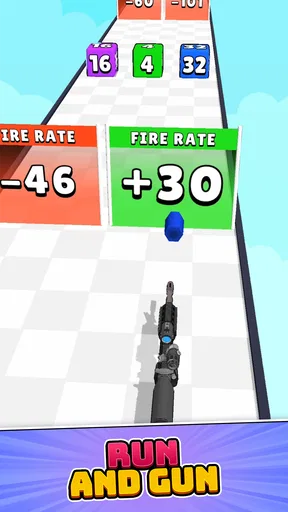
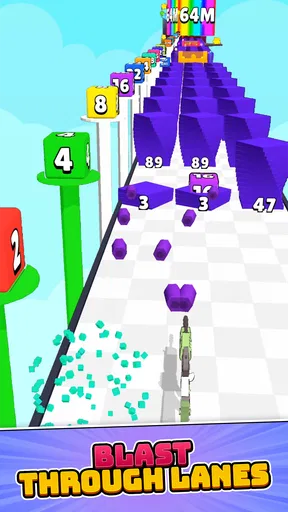
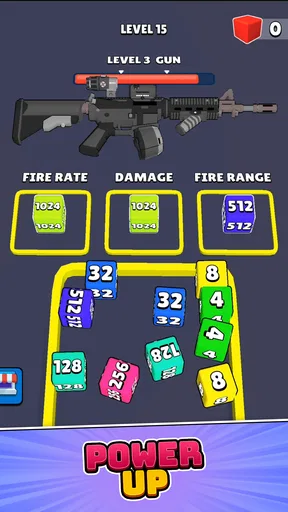
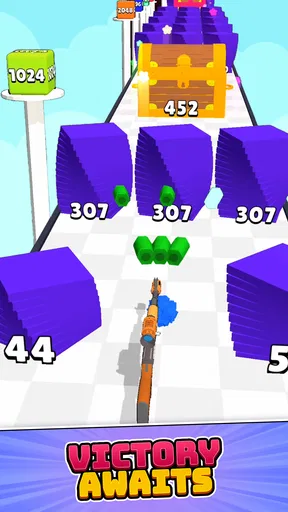
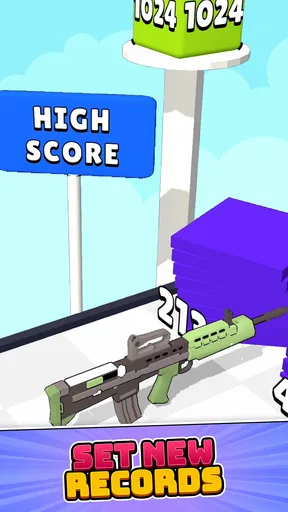
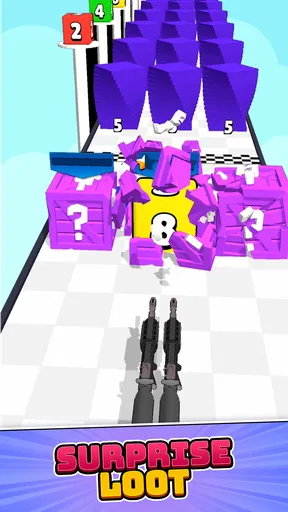
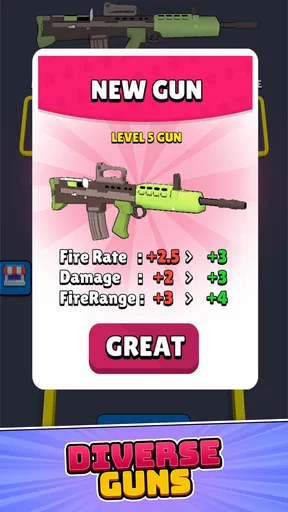
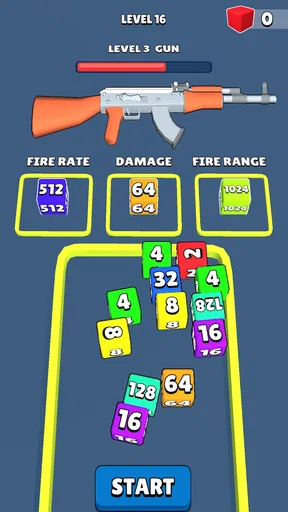
Our Review of Gun up Weapon Ball Shooter
 Analysis by Appyee
I spent time with Gun up Weapon Ball Shooter as a quick, casual role-playing game built around shooting balls and improving a weapon. Its central idea is easy to understand: aim the gun, clear the balls in front of you, and use progress to make the weapon more capable. That simplicity is the main attraction. I could start a session without learning a complicated story, a large character roster, or a long list of controls.
At the same time, the game is more focused than a traditional role-playing title. It does not ask me to manage a deep party, explore a broad world, or follow an elaborate narrative. Instead, its role-playing flavor comes from the feeling of building up power while working through repeated shooting challenges. That makes it suitable for short sessions, especially when I want something direct rather than a game that demands a large time commitment.
How the shooting loop creates its first goals
The opening objective is immediately readable: remove the balls with the gun and keep improving the weapon. I like that the game does not bury its basic purpose under a long tutorial. The first few moments are about understanding the relationship between aiming, clearing targets, and becoming stronger. For a new player, that gives the game a practical early goal instead of asking for blind experimentation.
Those first goals matter because the shooting itself is intentionally uncomplicated. The appeal is not in mastering a large collection of buttons. It is in seeing whether a better weapon makes the next group of balls easier to handle. That creates a small but understandable question after each attempt: should I continue with the current setup, or spend my progress on an upgrade before moving on?
I found this structure particularly comfortable during short breaks. If I had only a few minutes, I could focus on clearing targets rather than remembering a complicated quest chain. A quick session also felt less wasteful than starting a story-heavy role-playing game and stopping before anything meaningful happened. Here, the action and the upgrade purpose are closely connected from the beginning.
The trade-off is that players who expect a rich role-playing framework may find the early game narrow. There is no reason to approach this as a substitute for a large adventure RPG. Its strength is the compact loop of shooting and improving, not character drama or world-building. I would recommend it to someone who enjoys visible, immediate goals, but not to someone choosing an RPG mainly for exploration and narrative.
What weapon upgrades add to each session
Weapon improvement is the feature that gives the shooting more purpose than simply tapping through targets. When the gun becomes stronger, the player can feel that earlier effort has changed the next challenge. That is an important progression signal in a game with a simple premise: the upgrade has to make the repeated action feel worthwhile.
My advice is to treat upgrades as a response to friction rather than spending automatically whenever an option appears. If the current targets are being cleared comfortably, saving progress for a more useful improvement can make the next difficult section feel more manageable. If progress slows sharply, upgrading sooner may be the better choice. This small decision gives the game more thought than its straightforward presentation initially suggests.
There is also a useful psychological balance here. The game does not need a complicated inventory to make improvement satisfying. A stronger gun is an easy result to understand, and that clarity helps the player connect action with reward. For casual players, this is more approachable than a system filled with statistics that require constant comparison.
However, the same clarity can become a limitation over longer play. Once the main question is always “how much stronger can the weapon become,” the sense of discovery may depend heavily on how varied the encounters remain. Players who need several different progression paths may eventually want more strategic variety than this focused format provides.
Reading the difficulty instead of rushing through it
The challenge works best when I treat each group of balls as a small test of control and preparation. Shooting quickly is tempting, but rushing can make the upgrade decision less useful. I had better results when I paid attention to how efficiently the current weapon handled the targets and used that impression to judge whether I was ready to continue.
This is one of the more practical ways to approach the game. Rather than assuming that every obstacle should be overcome immediately, I viewed a difficult section as a signal to improve the weapon and try again. That turns a possible stopping point into part of the progression loop. It also prevents the game from feeling like a pure reflex exercise, because preparation affects how comfortable the next attempt becomes.
The difficulty curve is therefore tied closely to the upgrade rhythm. When the weapon feels capable, the pace is brisk and satisfying. When targets take more effort, the game asks for patience and a better use of accumulated progress. I would not describe this as a complex tactical curve, but it does provide a basic sense of rising pressure without requiring advanced RPG knowledge.
Players should also understand what kind of challenge they are getting. This is not the right choice if I want elaborate boss patterns, deep team composition, or a large number of combat roles. Its challenge comes from repeating the shooting loop while managing improvement. That can be pleasantly focused, though it may feel limited to anyone looking for constantly changing mechanics.
Progress signals that keep the loop understandable
A good casual game needs to show me why another attempt is worth making. Here, the clearest progress signal is the weapon itself. I can connect a stronger gun with faster or more comfortable target clearing, which makes improvement easy to understand even without a complicated character sheet.
That direct relationship also helps new players avoid a common problem in role-playing games: spending resources without knowing whether the choice mattered. The game’s central upgrade idea is simple enough that I can judge its value through play. If the next group feels less troublesome, the benefit is obvious. If it does not, I know that simply repeating the same approach may not be enough.
I recommend paying attention to the point at which an upgrade changes the pace of a session. That is more useful than chasing every improvement immediately. A player who notices when the gun begins to struggle can plan around that moment, turning progress into a small routine: shoot, assess, improve, and return. This is a concrete way to make the uncomplicated system feel more deliberate.
The downside is that progress can feel less exciting for players who want a broad collection of unlocks or a strong sense of personal identity. The game’s appeal is functional rather than expressive. I felt that I was improving a tool for the next challenge, not building a highly customized hero. That distinction is important when deciding whether the game matches personal expectations.
Where retention feels natural and where it may feel pressured
The game encourages continued play through a familiar cycle: clear targets, build progress, improve the weapon, and test that improvement against the next challenge. This loop is easy to return to because I do not need to reconstruct a complicated plan after taking a break. A short session can end cleanly, and another session can begin with the same clear purpose.
That makes it a sensible choice for commuting, waiting rooms, or a few quiet minutes at home. In an everyday scenario, I could play a brief round while waiting for an appointment, stop without losing track of a long quest, and return later knowing exactly what I was working toward. The focused design suits those moments better than a game that expects uninterrupted attention.
There is an important distinction between natural retention and pressure, though. The satisfying reason to continue is seeing whether the next weapon improvement changes the shooting experience. If a player is enjoying that connection, the loop can carry itself. If the player is not interested in repeating similar target-clearing actions, upgrades alone may not be enough to maintain attention.
The presence of optional purchases also affects how I evaluate the long-term experience. The game is free to play, while its in-app purchases range from $3.49 to $13.99 per item. I would approach those purchases carefully and first decide whether the basic shooting loop is enjoyable without spending. A paid boost can make sense for someone who values convenience, but it should not be mistaken for added depth. Players who prefer a completely purchase-free progression path should keep that consideration in mind before investing much time.
The age rating is Everyone, which fits the accessible nature of the concept. I would still recommend that families treat any optional purchase system thoughtfully, particularly when a child is using a device with payment access. The game’s straightforward presentation makes it approachable, but ease of access is not the same as unlimited suitability for every spending preference.
How it compares with broader role-playing alternatives
Compared with a conventional mobile RPG, this game is much more focused. A larger alternative may offer story missions, character development, equipment choices, and several combat styles. Those games can provide more variety over many hours, but they also require more reading, more management, and more commitment. Gun up Weapon Ball Shooter is the better fit when I want one clear action and one understandable improvement path.
It also differs from a pure arcade shooter. The weapon-upgrade emphasis gives repeated shooting a longer-term purpose, so the game is not only about surviving a single high-score attempt. On the other hand, it does not appear aimed at players who want a highly technical shooting challenge with extensive precision mechanics. Its middle ground is casual action supported by light progression.
That positioning makes the decision fairly clear. Choose this game if the idea of clearing balls and gradually improving a gun sounds satisfying, especially in short sessions. Choose a larger RPG if the main attraction is story, exploration, party planning, or a wide range of character builds. Choose a more specialized arcade shooter if mastery, speed, and score chasing matter more than upgrades.
The developer is Fun Games Teknoloji, and the game has built a substantial audience, with over five million installs and an average rating of 4.2 from around thirteen thousand ratings. Those figures suggest that the simple concept has broad appeal, but they do not change the central question I would ask before installing: do I enjoy repeating a compact shooting-and-upgrade loop?
Practical expectations before downloading
The game is free to download, so the entry barrier is low. It supports devices running Android 7.0 or later, and the current version is 5.1. I would check the device requirement before installing, especially on an older phone or tablet. For a player who wants to try the core idea without committing money upfront, the free starting point is useful.
I would also set expectations about session length. This is better suited to repeated short visits than to a single long adventure. Its structure gives me a reason to play one more attempt, but not necessarily a reason to spend an entire evening. That can be a strength for casual users and a weakness for players who want a large, absorbing campaign.
One of my more useful habits with this type of game is to stop after a meaningful upgrade rather than continuing until the loop feels tiring. Ending on a clear improvement preserves the sense of progress and makes the next session easier to resume. It also helps reveal whether I genuinely enjoy the action or am only continuing because the next upgrade is close.
Another tip is to judge the game by the feel of its progression, not by the promise of a more complex RPG. If the weapon improvement makes each return satisfying, the focused design is doing its job. If I keep waiting for deeper systems to appear, I am probably using the wrong comparison point and would be happier with a broader role-playing game.
My verdict on the pacing and progression
Gun up Weapon Ball Shooter succeeds when it stays close to its central idea. Shooting balls, improving the gun, and testing that improvement form a readable loop that is easy to start and easy to revisit. The early goals are clear, the progress signal is understandable, and the difficulty encourages players to think about when an upgrade is needed rather than simply pushing forward without reflection.
Its limitations are equally clear. The game is not designed to replace a story-driven RPG, and players who need extensive customization or constantly changing combat may find the structure too narrow. The optional purchases, priced from $3.49 to $13.99 per item, are another reason to decide early whether the free experience already feels satisfying. Spending should be a convenience choice, not the reason to keep playing.
For me, the strongest use case is a player who wants a light role-playing game with immediate action and visible weapon growth. It works particularly well for short breaks, casual play, and anyone who prefers a simple upgrade decision over a crowded menu of systems. I would skip it if my priority were narrative, deep strategy, or a large world to explore.
Overall, I see it as a focused and approachable free game rather than a full-scale RPG. Its pacing is most effective when I play in small bursts, notice how the weapon handles the current challenge, and upgrade with a purpose. The best reason to try it is the clean connection between shooting effort and weapon progress. If that connection sounds appealing, this is an easy game to sample; if it does not, extra progression alone is unlikely to change your mind.
Verdict
Strengths of Gun up Weapon Ball Shooter
- Simple one-touch controls make it easy to start playing.
- Short levels are convenient for quick gaming sessions.
- Satisfying weapon upgrades add a sense of progression.
- Bright visuals and arcade effects keep the action lively.
- Works well for players who enjoy casual shooting challenges.
Limitations of Gun up Weapon Ball Shooter
- Gameplay can become repetitive after extended play.
- Some upgrades may require considerable grinding to unlock.
- Difficulty spikes can make later stages feel frustrating.
- Frequent ads may interrupt the flow for free players.
- Limited strategic depth may not appeal to serious shooter fans.
Other Releases by Fun Games Teknoloji
View All
Dice Attack : Roguelike Battle
Strategy4.0
Similar Picks in This Category
View All
Hair Dye
CrazyLabs LTD4.4

Monster High™ Beauty Salon
CrazyLabs LTD4.5

Bus Simulator - Bus Games 3D
Jima Apps4.4

Flight Pilot: 3D Simulator
Wildlife Studios4.1


Super Stylist Fashion Makeover
CrazyLabs LTD4.4
Frequently Asked Questions
What is Gun up Weapon Ball Shooter about?
Gun up Weapon Ball Shooter is an action game focused on shooting, aiming, and upgrading your weapon while facing waves of targets or enemies. Its main appeal comes from combining ball-based shooting mechanics with quick reflexes and simple progression. Players generally move through short levels, collect rewards, improve their equipment, and try to achieve higher scores as the challenges become more demanding.
Is Gun up Weapon Ball Shooter free to download and play?
The game is generally available to download for free, allowing players to try the main shooting gameplay without an initial purchase. However, free mobile games may include optional advertisements, bonus videos, or in-app purchases for upgrades, currency, weapons, or other advantages. Before downloading, it is worth checking the store listing for the current pricing, supported devices, and purchase details.
Does Gun up Weapon Ball Shooter require an internet connection?
Whether a permanent internet connection is required can depend on the version and the feature being used. Basic levels may work offline, but advertisements, cloud saving, leaderboards, updates, and some reward systems usually need connectivity. If you plan to play while traveling or without mobile data, test the game in airplane mode after installation to confirm which functions remain available.
Is Gun up Weapon Ball Shooter suitable for children?
The game uses shooting as its central mechanic, so parents should review its age rating, visual style, advertising, and purchase options before allowing children to play. The presentation may be cartoon-like rather than realistic, but the action still revolves around weapons and defeating targets. Parental controls are recommended, particularly if the device has payment methods or unrestricted access to advertisements.
What devices are compatible with Gun up Weapon Ball Shooter?
Compatibility depends on the Android or iOS version available through the official app store, as well as the phone or tablet’s hardware. The game should run best on relatively modern devices with enough free storage and updated operating software. Check the official store page before downloading, because requirements, supported regions, file size, and availability may change with future updates.
Play our best games!


